
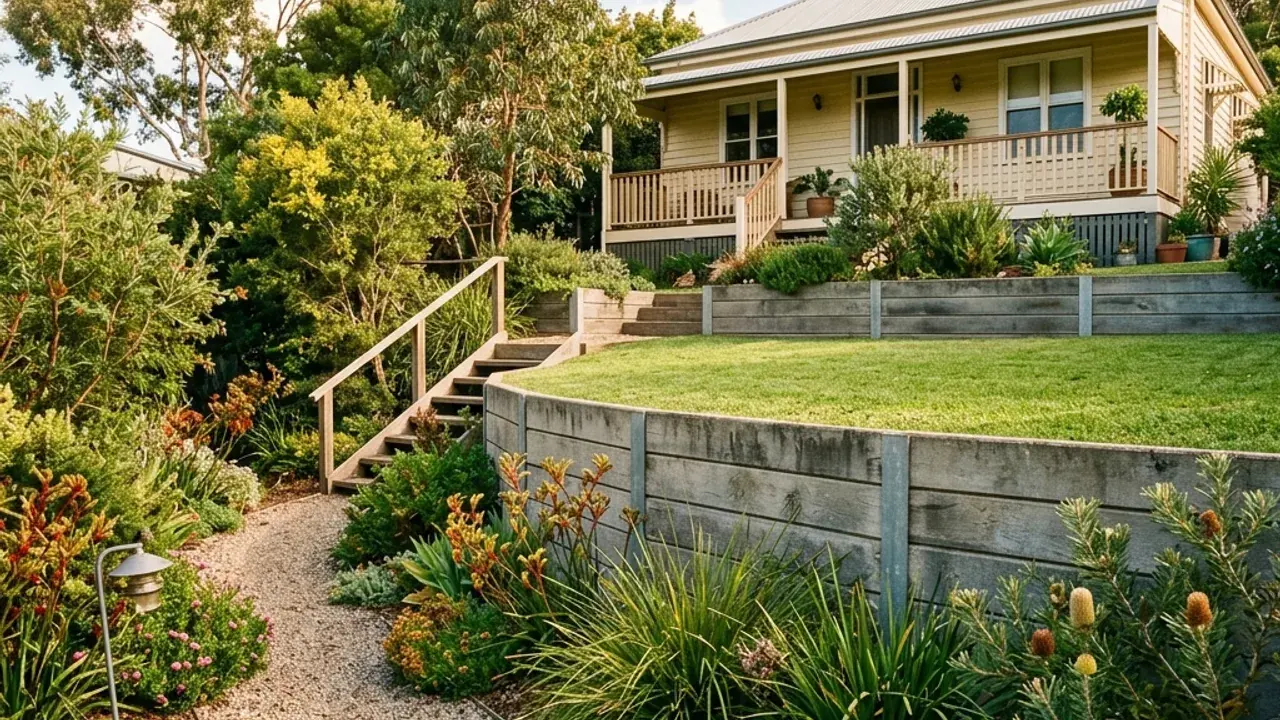
If a Dinmore wall is being rebuilt because the area stays wet, describe the water problem as well as the damaged structure. Where water comes from and where it can discharge may be central to the construction scope. A new wall also needs that route considered before backfilling. Tell us whether the job concerns a new garden level, an existing wall or both, and include the material, approximate size and access. The first enquiry should establish the questions for assessment, not assume that adding a pipe will fix every wet or moving wall.
Wall drainage needs a destination
Identify any visible outlet and describe water arriving from paving, a driveway or higher ground. Ask how the proposed collection and discharge arrangement will be checked for the property. The lowest corner of the yard is not automatically a suitable destination, and neighbouring land should not be treated as an available outlet.
If the drainage route crosses a path or another part of the garden, include the excavation and reinstatement in the proposal. That work can affect the scope even when the wall face is small. Establish responsibility for the relevant stormwater and design questions before construction is committed.
Separate a wet wall from a failed support
Staining, seepage or damp ground does not alone prove which component needs repair. Equally, a leaning wall, opened joint or broken sleeper should not be dismissed as a drainage-only issue. Describe the observations and any recent changes so the condition can be assessed appropriately.
Keep clear of visibly unstable sections rather than digging behind them or removing pieces to inspect a pipe. Once the assessment establishes whether repair or replacement is suitable, compare the construction options against the whole job, including retained ground, adjacent structures and disposal of old material.
Locating a Dinmore enquiry
Dinmore railway station, Dinmore Park and Ted Atwell Park help identify different local reference points. River Road, Noel Street and Brisbane Road provide more precise context for the approach to an address. Use those details to locate the work, then describe the wall's own position and water behaviour. Mark any known property constraint beside the wall position, together with the existing drain route and the surfaces affected by water. Where a property constraint may be relevant, it needs checking against the actual address and proposal. If water prompted the enquiry, say when it appears and whether the wall has changed position, so drainage and structural condition can both be assessed.
Check the property route, not the apparent low point
For a Dinmore property approached from River Road, show the existing outlet and where water gathers after rain, then ask the contractor to assess the discharge route. An address closer to Noel Street or the railway station still needs its own entrance, boundaries and levels described. Likewise, an adjoining park is not an assumed place to discharge water or store construction material. Include the private access route from Brisbane Road or the relevant local street to the wall. Keep the outlet, wall position and entry on the same sketch, including any path that would need excavation and reinstatement for a new drain.
What makes a drainage-related enquiry useful
- When the water appears
- Say whether it follows rain, irrigation or another event, and whether it remains after surrounding ground dries. Observations are more useful than an assumed cause.
- What the wall is doing
- Include visible leaning, cracking or material deterioration alongside water symptoms. The support condition may require a separate response.
- What is already known
- Existing plans, a visible drain end or earlier repair information can help the assessment. Unknown details should remain unknown until checked.
Retaining wall construction with the ground made good
Whether you choose sleepers, blockwork or stone, ask the written scope to cover water management and the surfaces disturbed to install it. Include removal if the old wall is being replaced, and identify any nearby fence or driveway. Confirm licence suitability, design and approval responsibilities, availability and the final agreed scope directly with the contractor before work begins.